
The community rated map is a survey that examines, for the tenth year in a row, the access to reproductive health services of Roma women from Shuto Orizari during pregnancy, childbirth and in the first months of motherhood, in circumstances of a pandemic.
Roma women from Shuto Orizari in 2021 faced difficulties in exercising their sexual and reproductive rights, particularly due to the pandemic caused by COVID-19 and the lack of a family gynaecologist in Shuto Orizari.
Therefore, the Association Initiative for Women’s Rights from Shuto Orizari started advocating to solve the long-standing problem of the lack of primary healthcare in the reproductive period, which resurfaced with the closing of the gynaecology practice in January 2020.
As a consequence, Roma women in the reproductive period were exposed to additional costs and risks, due to the duration of the administrative procedures for starting the work of the new family gynaecologist. At the same time, they were exposed to an increased risk of infection with COVID-19 due to the need to go to other municipalities to exercise their right to primary gynaecological care. At the end of April 2021, the gynaecological practice was opened in the Shuto Orizari Polyclinic, providing services in primary healthcare.
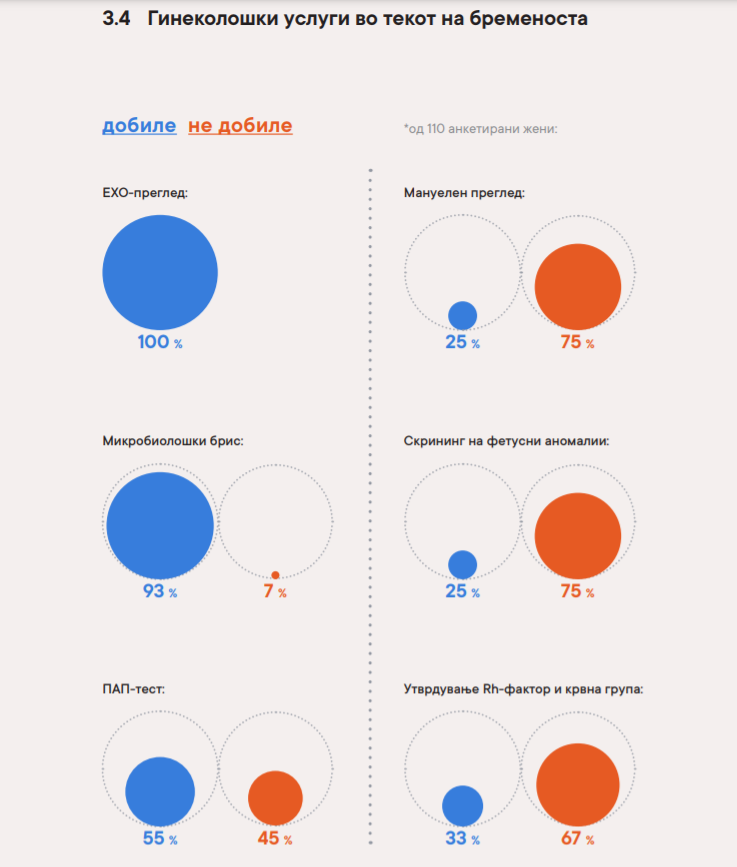
The research confirms that Roma women continue to encounter a significant number of obstacles in exercising the right to healthcare and care for reproductive health. Due to the lack of identification documents, some of the Roma women do not have health insurance and thus are not able to routinely use the services in the healthcare facilities.
The research shows alarming results in the area of coverage by patronage nurse visits to Roma women during pregnancy and after childbirth. Only 2% of women were visited during pregnancy by a patronage nurse service, although according to policies Roma women should be visited at least twice. The research shows that there is still a practice of unlawful charging for services that should be provided free of charge to women during pregnancy.
The full research, with the complete findings and recommendations, is available in Macedonian language here.